
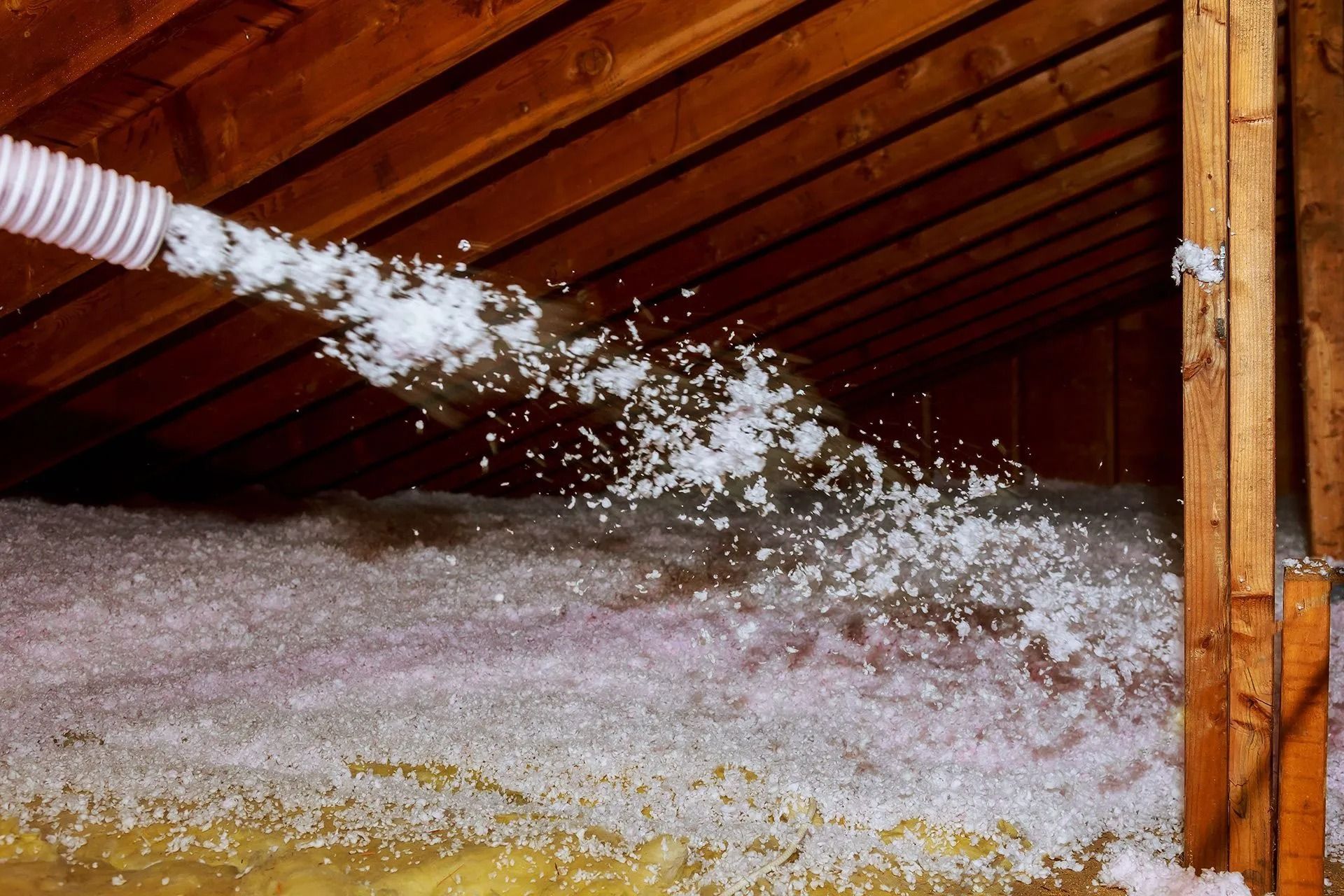
Blown-In Insulation
Blown-in attic insulation across Dickson, Columbia and Middle Tennessee. Top up thin attic coverage and stop heat loss through the ceiling. Free estimates.
Blown-in insulation is the practical way to fix an attic that is simply short of coverage. It is loose material blown in through a hose, so it flows around the joists, wiring and boxes and settles into an even blanket without anyone having to cut a single piece to fit.
Volunteer FoamPros installs blown-in insulation across Dickson, Columbia and Middle Tennessee. Call (615) 979-6739 or request an estimate.
When Blown-In Is the Right Call
Blown-in earns its place on attic floors, especially in older houses where the original coverage was thin to begin with and has been compressed, disturbed or pushed aside over the years.
It is the right choice when:
- The attic floor has patchy or shallow coverage
- You can see the tops of the ceiling joists through the insulation
- The house is finished and opening up ceilings is not on the table
- The attic has a lot of obstructions to work around
- The budget matters and the attic is where the loss is
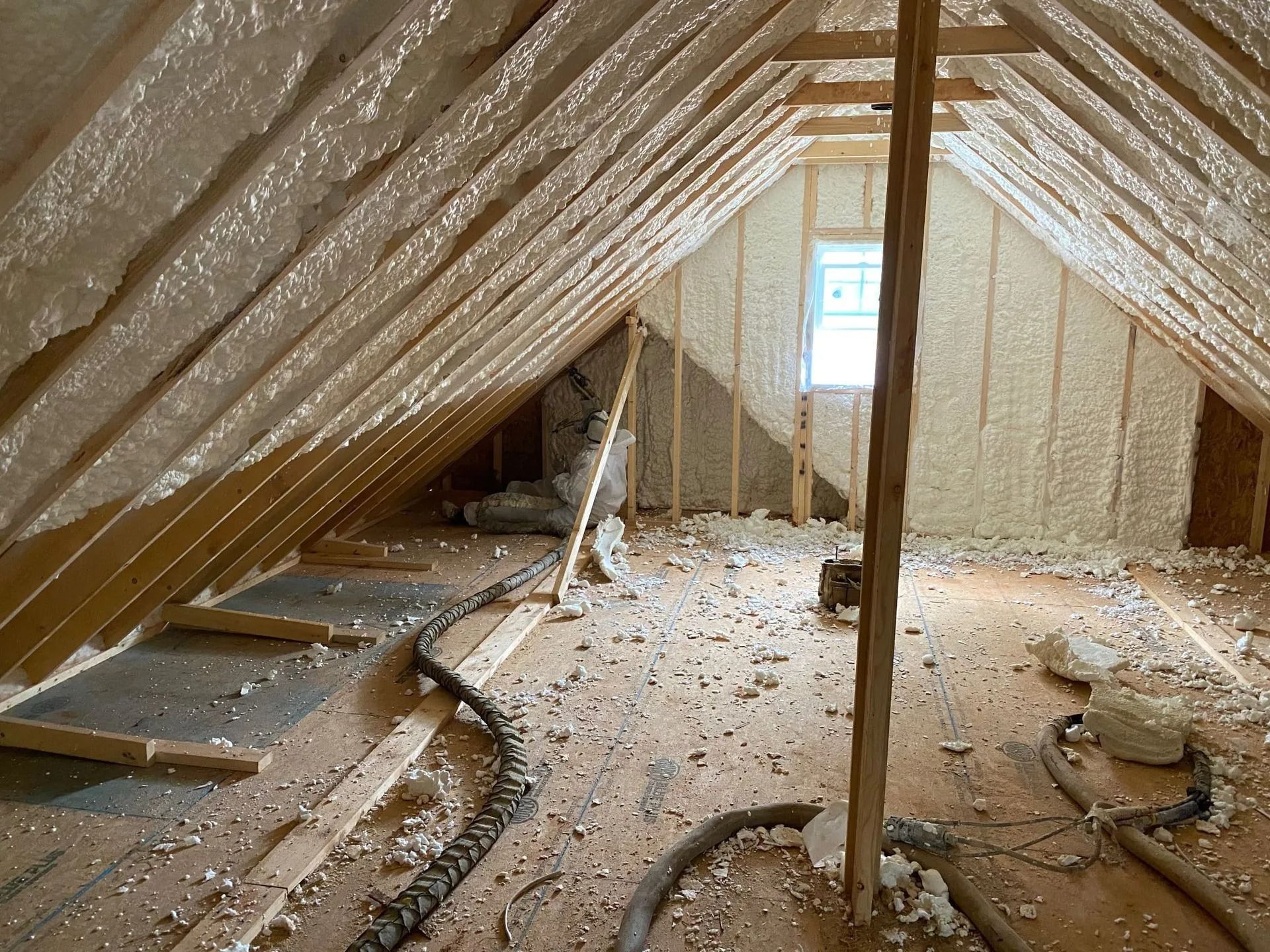
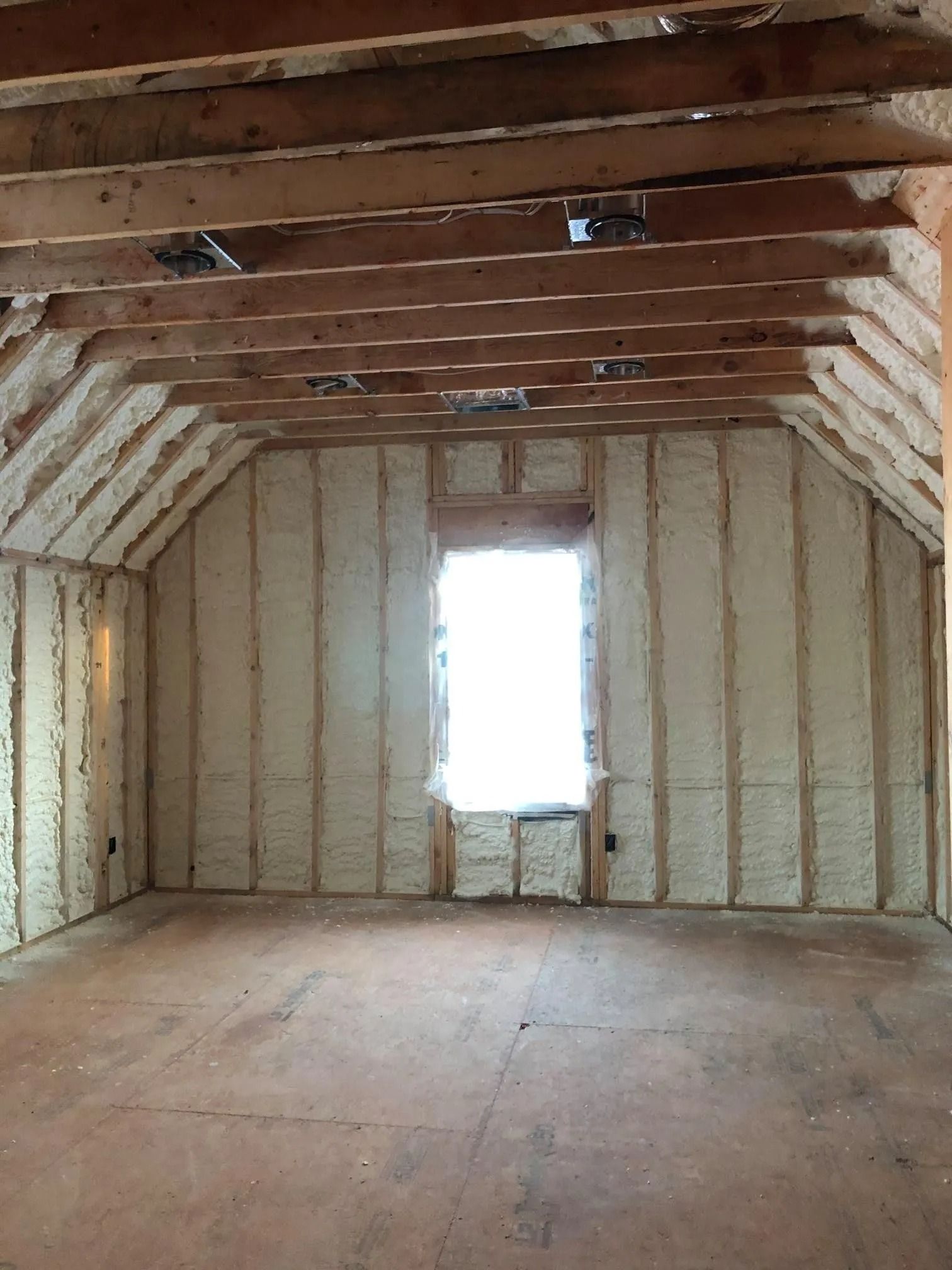
It is the wrong choice when the attic has active moisture, when the real problem is air leakage rather than R-value, or when you are trying to bring the attic inside the conditioned envelope. Those are spray foam jobs.
Air Sealing Comes First
This is the part that gets skipped and it is the part that matters most.
Loose insulation slows heat moving through it. It does not stop air moving through it. If the ceiling below has open top plates, gaps around light fittings, an un-sealed attic hatch and a bath fan venting into the space, then blowing material on top just covers the leaks without closing them.
We seal the penetrations first, then blow the depth on top. Doing it the other way round buries the problem and you get a fraction of the benefit you paid for.
How Deep
Depth is what R-value is made of, so the number that matters is inches on the attic floor once the job is done. We measure what is there, work out what is needed and quote the depth to get you to it, and we mark the depth in the attic so it can be checked later.
Existing material usually stays if it is dry and sound. It gets removed if it is wet, contaminated, rodent damaged or has come from a roof leak.
Serving Dickson, Columbia and Middle Tennessee
We install blown-in insulation across Dickson, Williamson, Davidson, Hickman, Cheatham, Maury and Humphreys counties.